

Did California Just Ban the Bible? No, but…
- Leo Shishmanian
- Apr 25, 2018
- 9 min read

Updated: Apr 26, 2018
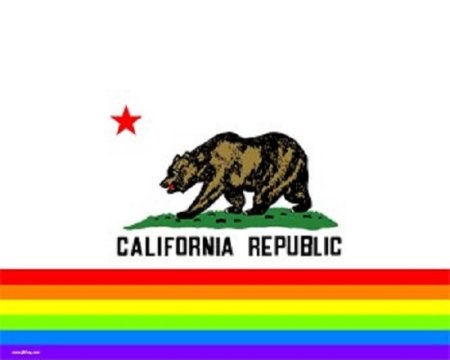
The California State Assembly passed Assembly Bill 2943 by a vote of 50 to 18 on April 19, 2018. If you listen to some voices, you’ll think the Golden State just banned the Bible.
Did they?
Well, the short answer is no, not directly. The longer answer is AB 2943 creates a slippery slope that will likely ban some books, it creates a greater likelihood of more restrictive legislation later and make it easier to ban the Bible, and it puts many religious leaders, counselors, and authors in the civil lawsuit cross-hairs.
And the bill creates a whole bunch of additional questions.
That’s not to say the Bible would or could ever be completely banned. Religious liberties and constitutional protections make the reality of banning the Bible highly unlikely. Yet even though the bill does not explicitly ban the Bible, it does little to quell the speculation.
Initially, I want to make clear that the purpose of this article is not to shame or condemn those who are part of the LGBTQ community or struggle with their identity, or to argue the relative morality of who they are or what they do. As an attorney with nearly 25 years of experience, I have represented many LGBTQ people in matters unrelated to their sexual identity. I intend to analyze the claims that this bill “bans the Bible” or creates other similar problems, and raise questions the bill creates. Part of this analysis must necessarily include looking at what the Bible says about homosexuality in the context of this bill.
Assembly Bill 2943 amends the California Civil Code relating to “unlawful business practices.” It begins with about 20 preliminary paragraphs supporting the underlying legislation. Some discuss how normal it is to be LGBTQ because many professional organizations, including the American Psychological Association, now normalize it. Others point out “sexual orientation change efforts” (we’ll come back to that later) are ineffective, harmful, empirically unproven, and overall a bad idea. Toward the end of this section, the bill states it, “intends to make clear that sexual orientation change efforts are an unlawful practice under California’s Consumer Legal Remedies Act.”
A definitions section follows adding the phrase “sexual orientation change efforts” and defining it as, “any practices that seek to change an individual’s sexual orientation [which] includes efforts to change behaviors or gender expressions, or to eliminate or reduce sexual or romantic attractions or feelings toward individuals of the same sex.”
The remainder of the bill recites California Civil Code Section 1770 which spells out the ways someone can engage in “unfair methods of competition and unfair or deceptive acts or practices.” And there are dozens of them. The only amendment the bill makes to this section is to add subsection 28: “Advertising, offering to engage in, or engaging in sexual orientation change efforts with an individual.”
So, on its face, AB 2943 does not ban the Bible. It also does not directly prohibit its advertisement or sale or preaching from it.
Unfortunately, that does not end the inquiry.
To know whether selling the Bible would violate this potential law, we would have to look at whether the Bible could be viewed as a book that includes or is being used for “sexual orientation change efforts.” There is nothing in the Bible directly counseling or engaging an individual in such efforts. But the Bible does have some “judgmental” things to say about homosexual activity that could be used this way.
For example, Jude’s letter describes the “sexual immorality and perversion” of Sodom and Gomorrah and how these cities, “serve as an example of those who suffer punishment of eternal fire.” Jude1: 5-7 (NIV). Sodom and Gomorrah are well-known from the Old Testament recounting of Abraham rescuing Lot as places of perverse sexual behavior, which, according to the story, included homosexual sex acts. Jude continues, “In the very same way, on the strength of their dreams these ungodly people pollute their own bodies, reject authority and heap abuse on celestial beings.” Jude 1:8 (NIV).
In Timothy’s first letter, Timothy describes that, “the law is made not for the righteous but for lawbreakers and rebels, the ungodly and sinful, the unholy and irreligious, for those who kill their fathers or mothers, for murderers, for the sexually immoral, for those practicing homosexuality, for slave traders and liars and perjurers—and whatever else is contrary to sound doctrine that conforms to the gospel concerning the glory of the blessed God….” 1 Timothy 1:8-11 (NIV). That’s quite an unpleasant list to be included on.
In his first letter to the Corinthians, Paul writes, “neither the sexually immoral, nor idolaters, nor adulterers, nor men who have sex with men, nor thieves, nor the greedy, nor drunkards, nor slanderers, nor swindlers will inherit the kingdom of God.” I Corinthians 6:9-11 (NIV).
My purpose in sharing these verses (and there are several others), again, is not to engage in a debate on the morality of the LGBTQ community or its members, their political activities, or what kinds of intimate acts they engage in. Rather, the point is, for the purposes of discussing AB 2943, the Bible has some plainly harsh things to say about homosexual activity and those who practice it.
When viewed through AB 2943, can these Bible verses be interpreted as engaging in indirect sexual orientation change efforts by negatively describing homosexual acts as perverse and immoral? If this bill becomes law, will someone who preaches or counsels from these verses be violating the law and subject to civil lawsuits and damages? What about liability for leaders of a Bible study where these verses are discussed? The language of AB 2943 seems to suggest these are possibilities.
What about books other than the Bible? Dr. Michael Brown is a well-known conservative Christian author, nationally syndicated radio host, and frequent commentator on the tension between Christianity and the Bible, and homosexuality and the LGBTQ movement. He has written several books including Can You Be Gay and Christian? that argue in favor of a Biblical view opposed to homosexuality and supporting sexual orientation change therapy. He even dubbed AB 2943 as the “Must Stay Gay” bill much to the chagrin of it's supporters. If the bill becomes law, how could the sale of his books possibly be considered anything but an unfair or deceptive business practice? If Dr. Brown discussed these issues on his radio show, could California ban transmission of his broadcasts to stations based there?
Sy Rogers, an acquaintance of mine, is a successful living example of sexual orientation change. He has spoken candidly to hundreds of thousands about his testimony and God’s transforming power. His perspective is that God is not angry with homosexuals or people who question their sexual identity. Here is an example from his website:

Could Sy be banned from speaking in California despite having experienced successful orientation change through the power of God and His love? Could California block his website?
Now, admittedly, there have been and are therapies directed at sexual orientation change that have focused on shame, condemnation, and, in some cases, violence. Obviously, therapies of these types should be at least subject to strict regulation, and potentially prohibited. Unfortunately, AB 2943 lumps together these therapies with your local Christian pastor or Muslim imam who is counseling someone on sexual identity issues from a religious or spiritual perspective, no matter how gently.
The bill also uses a very broad brush to include the sale of books and materials designed to help people dealing with sexual identity issues understand the conflicts and help them make the best choices. Dr. Brown, Sy Rogers, and others might be persuasive to the conflicted reader. And if so, some may make choices that might not be in line with the LGBTQ community, or professional or medical organizations who have “normalized” LGBTQ identities and behaviors. Shouldn't they have access to a variety of materials on all sides to help them make their choice?
As a result, the bill seems directed at religious persons and groups who believe homosexuality is wrong, or learned behavior, or capable of reversal from thousands of anecdotal testimonies (whether empirically proven or not). These persons and groups, by the bill’s direction, are considered equal to the unknown number of persons or groups (again, anecdotally and not empirically proven) who have used arguably cruel or aggressive methods, or been unsuccessful at "changing" identities of LGBTQ individuals.
If this direction is intentional, then it is not far-fetched to conclude the bill’s supporters’ endgame is the banning of the Bible and other books, and all religious or spiritual based counseling of any kind regarding issues of sexuality. After all, the Bible mentions “adulterers” as also sexually immoral. If homosexuality is considered normal, making sexual orientation change efforts unfair and deceptive, why should therapies directed at changing the identity or behavior of adulterers be any less unfair or deceptive? Those who give into their sexual lusts are also variously condemned in the Bible, yet our culture normalizes, and in some cases celebrates, sexual exploration, experimentation, and promiscuity. Why shouldn’t we then also ban therapies that help people with addictions to sex or pornography?
And why stop with businesses anyway? The bill painstakingly informs us how normal LGBTQ identity is and how terrible therapies are that attempt to change it. If it is harmful for doctors, psychologists, social workers, pastors, imams, authors, and other professionals to do it, why should parents be allowed to? Certainly, there are cases where parents believe LGBTQ lifestyles are not normal and need to be discouraged in their children. Such parents would not fall under AB 2943 as they would not be engaging in a “business practice.” But if sexual orientation change efforts are as harmful as the bill says, why should parents be immune from penalties given how bad and useless the law considers these efforts? Wouldn’t a parent's efforts be child abuse?
Moreover, why is the restriction on “sexual orientation change efforts” limited to changing individual identities from gay to straight? Leftist politicians and organizations, the LGBTQ community, GLSEN, the Human Rights Coalition, and many others promote the affirmative, positive teaching of homosexuality and homosexual activity to children. Remember the Massachusetts "Teach Out" program from 2000? I will not detail the graphic sexual nature of the conference (you can read about the extremely sexually graphic handouts and instruction here—WARNING, GRAPHIC AND NSFW), but suffice it to say it certainly attempted to “normalize” various homosexual sex practices among other things. Don't programs like this encourage straight children to experiment sexually, including but not limited to with homosexual acts, and thereby potentially “change” their orientation from straight to gay?
You might say, yes, but that was in 2000. A more recent example arrived last year in the form of “A Guide to Anal Sex” published by Teen Vogue—yes, that’s Teen Vogue, not Vogue—magazine, which you can see here—AGAIN, WARNING, GRAPHIC AND NSFW. Sure, some of the sex activities they promote are ones heterosexuals engage in, too. Yet, couldn’t it be just as easily argued that these and many other resources, classes, and conferences that normalize homosexual activity and experimentation are “sexual orientation change efforts” designed to encourage change from straight to gay? Don’t public school curricula that promote “medically accurate” sex education directly support the normalization of homosexual sex acts and, thereby, encourage practicing the same (in a “safe” manner)?
The questions really do not stop with AB 2943 and the bill seriously complicates the issues. But public policy, culture, politics, and laws did not get to this point overnight. The movement has been going on since long before Modern Family. Long before Billy Crystal portrayed Jodie Dallas, the first openly gay television character on the ABC show Soap in the 1970s.
In fact, this coming weekend, something called the Cleveland Leather Awareness Weekend (CLAW), an event clearly directed toward homosexual men, will be going on in Cleveland, Ohio. In addition to naked pool parties and BDSM parties, the event includes “skills and education” workshops like “Humiliation: Hot, Edgy, and Sometimes Dangerous,” “Where the Hell Do You Think That’s Going?” and “An Intro to Fisting: Oh, the Places You Can Go!” If you care to check the event out, here is a link—AGAIN, WARNING, GRAPHIC AND PROBABLY NSFW. While this event clearly is not designed to change orientation, it is a sign of how far the culture has moved from Jodie Dallas.
And culture influences public policy, politics, and legislation.
Bills like AB 2943 have a legitimate goal to protect LGBTQ persons from mentally, emotionally, or physically harmful therapies. Everyone should be treated with love and respect, especially when they are dealing with difficult identity issues. And, yes, Christians and conservatives, we need to understand that "everyone" includes people who might attend CLAW, or a gay pride parade, regardless of what we think about their behaviors.
Nevertheless, AB 2943 and bills like it create a slippery slope that could lead to greater restrictions and prohibitions on personal liberties and constitutional rights, including the rights of those LGBTQ persons who may wish to learn about alternatives. The breadth of this bill creates many more questions than the bill answers, many more potential problems than it solves.
So, California still lets you buy, sell, read, and preach from the Bible and use resources from Christian authors.
Unfortunately, AB 2943 makes answering the question, “But, for how long?” substantially murkier.


Comments